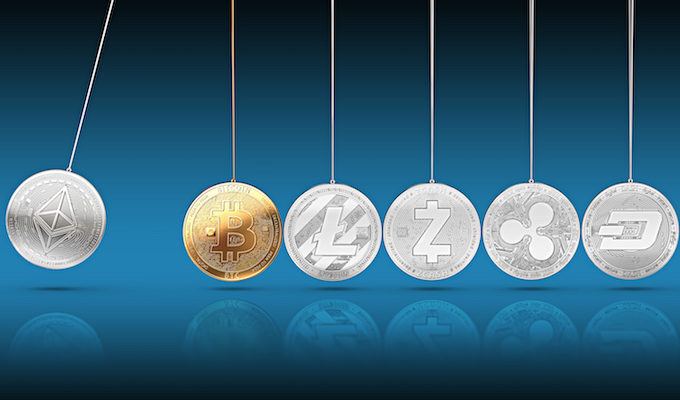
Most traders find that altcoins are where crypto gets interesting, but also where things can get brutally unpredictable. Bitcoin has dominated the headlines for a long time, but the wider market is packed with many other projects built around smart contracts, tokenization, decentralized finance, artificial intelligence, and countless other ideas.
If you’re thinking about whether to buy Solana or another altcoin, then you shouldn’t only focus on whether SOL could go higher, but also on understanding what you’re buying because the project behind the currency matters. And let’s not forget about the amount of risk you’re willing to take; that will have a huge impact on your success.
There is no secret formula for making money investing in altcoins, but there are a couple of smart ways to approach the market.
Don’t start with the price chart
This is one of the most common mistakes altcoin investors make. They start in the wrong place, open a chart, see that the altcoin they want to purchase has risen 200%, and wonder if they should add it to their portfolio before it rises another 200%. But this is backward; you should instead start with the project because you want to figure out the answers to questions like:
- What problem is it trying to solve?
- What blockchain does it use?
- Does it have actual users?
- Who develops it?
- How is the token used?
- How many tokens exist?
- How many are still waiting to enter circulation?
Yes, they’re not very exciting questions, but their answers tell you a lot about the altcoin’s potential.
Understand the technology behind the token
Maybe you decided to invest in an altcoin like Ethereum because you believe that its blockchain has a future. In this case, you should understand the basics of that blockchain. Let’s take Ethereum for example. ETH isn’t simply a cryptocurrency that people trade. Ethereum provides infrastructure for smart contracts and decentralized applications, and its smart contracts function as programs deployed on the blockchain.
If, on the other hand, you decide to invest in an altcoin like Solana, then you should check its technological thesis because it’s quite different. Its ecosystem focuses heavily on high-speed on-chain applications, decentralized finance, trading, tokenized assets, and payments. Solana’s own documentation describes its infrastructure as focusing on supporting oracles, lending markets, DESs, and perpetual markets within its on-chain environment.
Look for an ecosystem, not just a token
A token is more interesting when it has a complex ecosystem developing it. Let’s get back to Solana, which in August 2026 reported 216 million non-vote transactions on its network in a single day. Besides this, its system continually expands its tokenized assets, stablecoins, DeFi, consumer applications, and trading. It’s normal for SOL’s price to stay stable or even grow when the supporting ecosystem evolves.
You want to look beyond the ticker because when you invest in a blockchain with developers building applications, you interact with those applications. Also, capital flowing through the ecosystem gives you more to analyze than a token whose philosophy is reduced to “the community loves it”. Ethereum offers a similar example, with an extensive smart-contract ecosystem supporting decentralized applications and financial products.
Study tokenomics before buying
Tokenomics is where many exciting-looking alternative coins lose their shine. Here are some questions you should try answering:
- How many tokens exist?
- What’s the maximum supply?
- How much is currently circulating?
- Who owns the largest allocations?
- Are there upcoming unlocks?
- How quickly is supply entering the market?
Maybe you’ve discovered a fantastic blockchain project and consider buying its token because you believe demand will increase. But you start researching its tokenomics and find that a large amount of previously locked tokens will enter circulation soon. It signals that your investment thesis needs another paragraph because token supply impacts the balance between demand and available tokens.
Don’t confuse a cheap altcoin with a cheap investment
This piece of advice deserves a lot of attention. Only because a token is priced under $0.02 doesn’t mean that it’s automatically cheaper than one priced above $200. The individual token price reveals very little without checking information about its market capitalization and circulating supply.
Suppose Project A has 10 billion tokens priced at $0.20.
That’s a $2 billion market capitalization.
Project B has 10 million tokens priced at $200.
That’s also a $2 billion market capitalization.
The first token looks dramatically cheaper.
It isn’t.
Add multiple altcoins to your portfolio to build different investment theses
You want to make altcoin investing more rational, so it’s time to stop thinking of your portfolio as a random collection of coins. There should be a sound reason behind each decision to add a new coin to your portfolio.
- you add Ethereum because it acts as a point of exposure to smart contracts
- you add Solana because it represents high-throughput on-chain applications and has a rapidly developing ecosystem
- you add XRP because it meets the thesis around blockchain-based payments
- you add Chainlink because it provides access to blockchain oracle infrastructure
- you add Aave because it enables decentralized lending
Each of these assets is motivated by another thesis. So if one of them drops, you only have to evaluate the reason why you added it to your portfolio and decide if it’s still valid.
Diversification is still important
Altcoin investing is not without risk, so putting your entire portfolio behind a single idea might not be the wisest choice. We recommend diversification as a way to reduce portfolio risk because it allows you to spread investments across different assets. However, you should also make sure you allocate assets to your portfolio according to individual goals, risk tolerance, and timeframe. And remember, diversification isn’t about adding as many altcoins as possible but identifying the ones that make the most sense for you.
Last words
Successful altcoin investing is about improving the quality of your decisions. So research the technology, understand tokenomics, study the ecosystem, check liquidity, watch development, and diversify.