Just several years ago, most of us considered digital security to be of secondary importance. That was until the first account was hacked or personal data was lost. Such situations rarely seem like a major crisis. However, they change our attitude toward technology. It becomes clear that convenience without protection quickly turns into risk. Our smart gadgets constantly collect, process, and store a huge amount of data about us. Thus, digital security is no longer just a technical issue for companies. It has become part of everyone’s daily life. Various programs and services fulfill this role. They form what is now called security solutions technology. In doing so, they create a digital shield for our devices and data.
Digital Security Evolution
In the early years of personal computers, security issues boiled down to protection against viruses. Today, the situation is completely different. The question of how technology has improved security has become key for developers and users as well. Tools no longer focus solely on viruses. They cover a wide range of threats. Namely, from phishing emails to complex attacks on cloud-based network services. Security has become systemic. The following have appeared:
- Firewalls;
- Intrusion detection systems;
- Runtime application self-protection mechanisms that monitor program behavior in real time;
- Platforms that analyze anomalies.
Security beyond antivirus
Today’s security is not just antivirus, but multi-layered protection. The latter considers various threat vectors:
- Encryption. Data on devices and in transit becomes unreadable to outsiders.
- Access control. Determining who and what data can be viewed or edited.
- Cloud security and VPN. Protect data when using public networks.
- Behavior analysis. Anomaly detection systems track unusual activity.
A real-life example of digital security in everyday life is using a VPN when you work in a public place. It creates a secure tunnel for your internet traffic, significantly reducing the risk of data interception.
When digital security ceases to be a set of separate tools and becomes an entire system, another problem arises. Namely, how can an ordinary user understand all of this? That is why it is crucial to consider not only the technologies themselves, but also resources that explain their logic and real-world use without unnecessary technical complexity. In particular, Moonlock offers analytical materials that clearly explain the things that modern users need to know. You can learn more at Moonlock why modern Mac systems need additional protection. Also, what practical steps help reduce the risk of infection by malicious software. You will find examples of real-life scenarios and explanations of current threats that help you better navigate the modern digital security landscape. In addition to general explanations, the resource offers a detailed overview of features that really help users stay safe. Thanks to this, you can gain not only a theoretical understanding, but also practical steps to really improve the security of all your gadgets that work together to create a complete system for you.
IoT Security
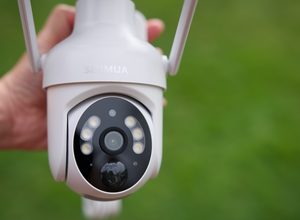
Today, even ordinary household devices are connected to the Internet. This is great for convenience. At the same time, it opens new avenues for attacks. So, when considering the question of how does digital access impact cybersecurity, we must understand that every new device becomes a potential vulnerability. A simple example is a surveillance camera that can send video to the cloud without encryption. Such a device can easily become an “entry point” for cybercriminals.
Strategy for securing IoT devices
Reliable protection requires a systematic approach. One that covers hardware, firmware, and network interaction. One such standard is PSA Certified. It ensures that manufacturers consider security at the chip level, not just in software.
Another approach is secure by design. Protection mechanisms are integrated at all stages of device creation. For example, cameras, smart thermostats, etc. may have:
- Built-in data encryption;
- Restricted access to critical functions;
- Regular security updates that are automatically downloaded and installed.
Practical user actions play an essential role:
- Regular firmware and software updates.
- Changing default passwords to complex ones that are unique for each device.
- Tracking connections using special traffic monitoring tools.
- Isolating IoT devices in a separate network from the main work computers.
By following these steps, you create multi-layered protection for your IoT.
Practical Tools and Strategies
Modern security systems only work effectively when you combine individual tools into a comprehensive protection strategy.
Real-time antivirus solutions.
They not only scan files for malware, but also monitor:
✔ Program behavior;
✔ Deviations from normal activity;
✔ Potential intrusion attempts.
VPN services.
They are not limited to hiding IP addresses. Modern solutions provide encryption of all traffic. They block suspicious services.
Password managers.
They help you create long and unique passwords for each account. They also integrate with two-factor authentication. All of this significantly reduces the risk of account compromise.
Monitoring. Activity analytics.
Special services allow you to track IoT device connections, network behavior, and suspicious program activity. This allows you to quickly detect threats that standard tools miss.
2FA
The use of hardware keys and code generator applications allows you to protect critical accounts even in the event of a password leak.
Conclusion
Data protection and device security are now a daily reality for all technology users. In a world where digital gadgets and services pervade every aspect of our lives, it is critical to understand how specific technologies function and how to use them. Modern digital security solutions allow us to stay one step ahead of dangers. Therefore, the right tools and knowledge are the key to confidence in our digital future.