My kitchen sink had got issues for months but I hesitated to fix it because I thought it would be complicated. Whenever I turned on the faucet, the water would drain at a snail’s pace. Even worse, when I run the dishwasher, the dirty wastewater backing up into the sink, creating a messy and unhygienic situation.
I thought that the P-trap under the sink was the problem. I took it out and it looked incredibly dirty and gunked up, so I went ahead and replaced it. Unfortunately, that didn’t solve the issue so I know that the clog was located further down the drain line.
I first tried the popular DIY remedy of baking soda, vinegar, and hot water, but of course, that didn’t work. So the only solution is to call a plumber or buy a drain snake to clear the clog. I bought the Husky 1/4 in. x 25 ft. Drill Drain Snake Power Drum Auger at Homedepot and it turned out to be surprisingly straightforward.
The first step was to remove the P-trap to gain direct access to the drainpipe opening. With the pipe exposed, I began feeding the snake into the line. I continued to push it forward until I felt resistance, that was probably the clog. I locked the line and started turning the crank on the drum auger. This rotating action allows the snake’s head to break through the obstruction. While the Husky snake can be attached to a power drill for more torque, I found that manual cranking was sufficient and more gentle to my old pipe.
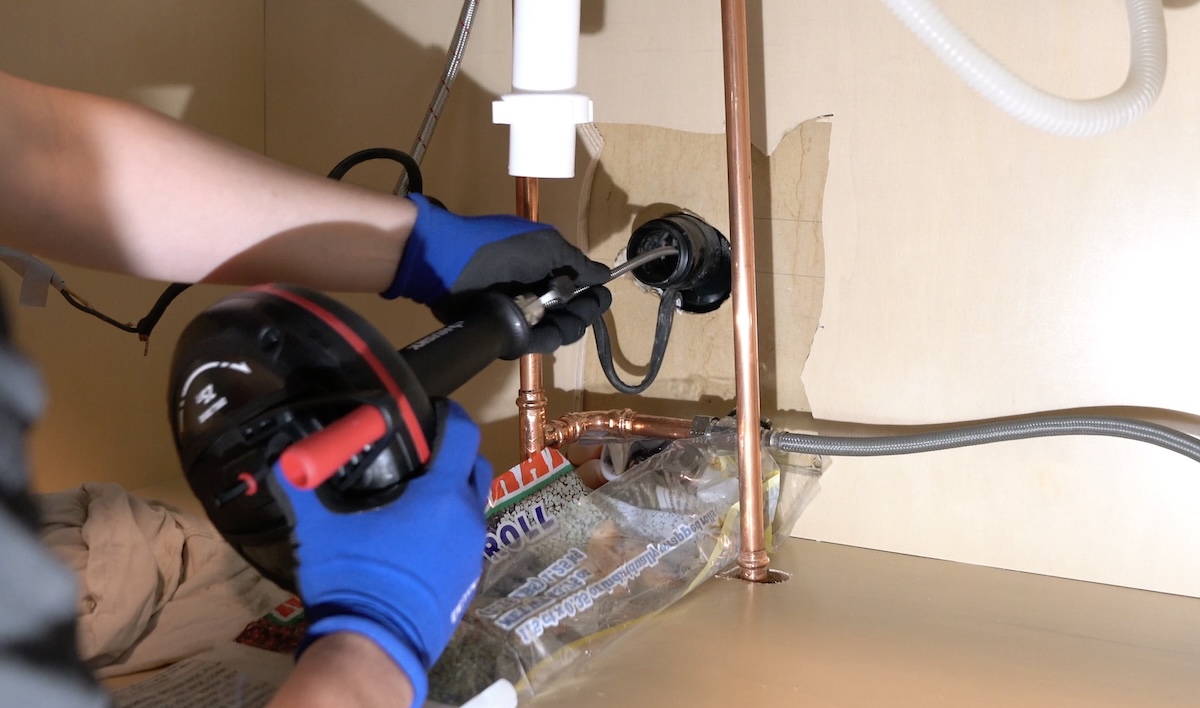
After a few moments of cranking, I no longer felt the resistance, and the snake began to advance more easily. That means the clog was likely cleared. I carefully retrieved the snake, making sure to clean it as it came out, as it brought with it some terrible gunk.
I reinstalled the P-trap and ran the water to test my work. The water now flows freely down the drain without any signs of backing up. The entire process took only about 10 to 15 minutes. This saved a significant amount of money as a plumber would charge at least $100 for a service call to clear the clog.