You might have heard about PFAS all over the news in the last few years. They are no longer an abstract environmental issue that only shows up in scientific reports. For many of us, we hear about it in relation to water quality, food packaging, or long-term health discussions. What’s changed in recent years, especially with Final PFAS National Primary Drinking Water Regulation, is not just the level of awareness, but the clarity around what action can look like at home.
PFAS in the U.S.: Why Location Matters
PFAS are a family of thousands of synthetic chemicals that show up in everyday products and environments. From non-stick cookware, stain-resistant fabrics, water-repellent apparel, and food packaging, to industrial and firefighting applications, PFAS are ubiquitous in modern life due to their durability and utility.
Because PFAS don’t break down easily in the environment, they persist in soil, air, vegetation, and water across vast areas, making exposure a nationwide concern – not just a regional one. For example, a multi-state analysis found PFAS contamination in 98% of tested U.S. waterways across 19 states, including elevated levels downstream from wastewater treatment plants and land application sites for biosolids.
In California’s Central Valley, the City of Fresno has become a high-profile example of localized PFAS pollution. Recent legal action alleges PFAS levels in Fresno’s groundwater exceed federal safety limits by more than 600%, with some compounds registering far above the EPA’s long-term drinking water standard. The contamination has been linked to decades of industrial use, agricultural inputs, and downstream migration into soil and groundwater near homes and businesses.
Elsewhere in the Southwest, residents near Cannon Air Force Base in New Mexico showed some of the highest PFAS blood concentrations in national studies, attributed to historical releases from firefighting foams used on base. In these communities, nearly all participants tested had detectable levels of PFAS in their blood, with about one-quarter reaching concentrations in the highest national tier.
So we can see that PFAS contamination can arise from both industrial and agricultural sources, and it can show up far from the obvious hotspots people might expect. That’s why broad statements about “unsafe tap water everywhere” don’t tell the full story. The EPA’s new enforceable limit—4.0 parts per trillion (ppt) for PFOA and PFOS—sets a clear benchmark for safe drinking water. Many municipal systems across the country are working to meet or maintain compliance, and that’s a significant step forward.
From Standards to Solutions
Regulation defines the goalpost, but it doesn’t always deliver immediate peace of mind at the kitchen sink. That’s where point-of-use solutions come in—especially for families who want an added layer of protection for drinking and cooking water.
Among available filtration methods, reverse osmosis (RO) stands out because of how it works. Instead of relying on surface-level adsorption alone, RO systems use a semi-permeable membrane that filters contaminants at the molecular level. This makes them particularly effective for reducing small, persistent compounds like PFOS and PFOA.
It’s important to be precise here. No responsible discussion should claim the “100% removal of all PFAS,” especially given that there are thousands of PFAS variants. What modern RO systems can do—and do well—is effectively reduce PFOA and PFOS by up to 98%, aligning closely with the EPA’s long-term health goals without overpromising.
How Reverse Osmosis Helps Households Take Control
One misconception I hear often is that RO systems are bulky, wasteful, or impractical for everyday households. That may have been true years ago, but tankless reverse osmosis systems have changed the equation.
Tankless designs save space under the sink, deliver fresher water on demand, and significantly reduce water waste compared to older storage-tank models. For families, that combination matters—not just for convenience, but for sustainability and daily usability.
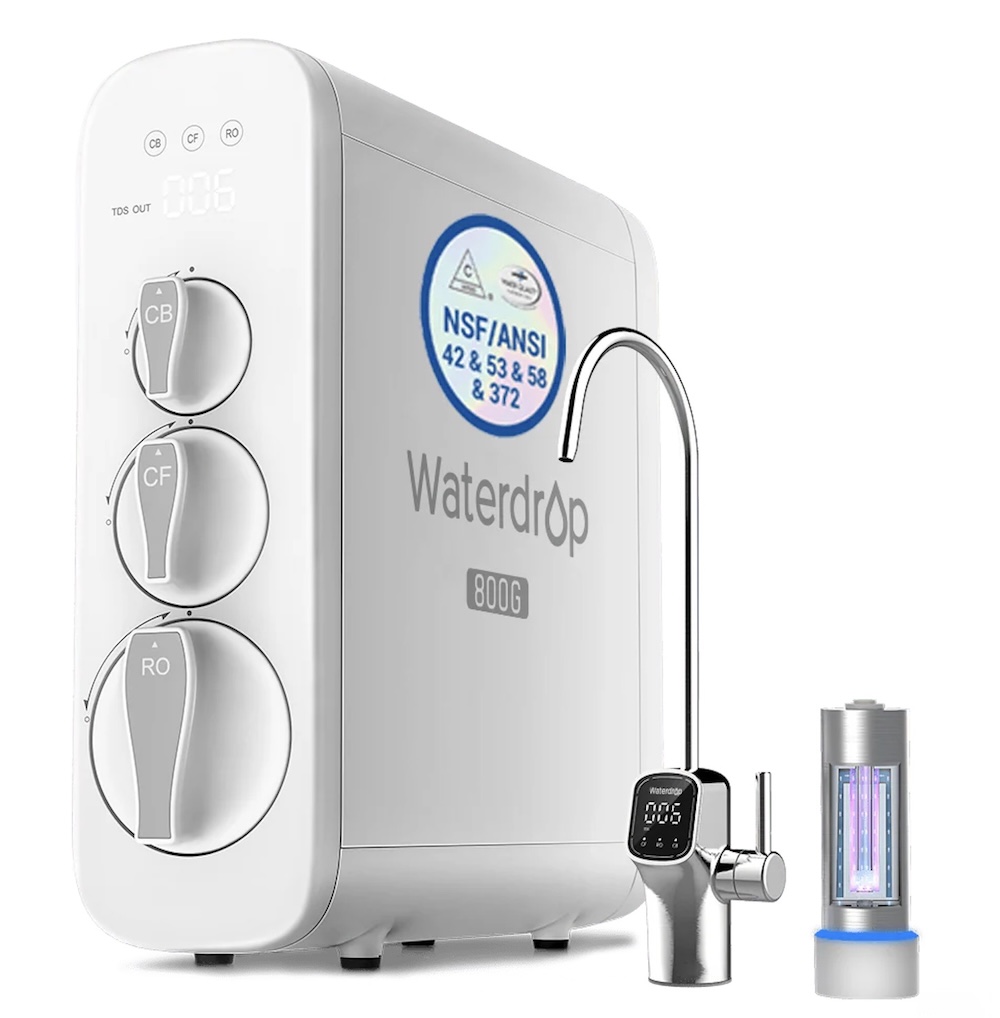
One of the family-focused solutions is the Waterdrop Filter G3P800. The system sits at the intersection of performance, efficiency, and practicality. Designed for health-conscious households, the G3P800 effectively reduces PFOS and PFOA at levels up to 98% while maintaining a compact, tankless footprint. It is built to meet recognized standards, including NSF 42 and NSF 53 certifications, and is designed in alignment with current EPA drinking water guidelines—giving families added confidence in its performance. For homes with babies, seniors, or anyone particularly sensitive to water quality, that reliability makes a real difference.
Of course, not every household looks the same, and filtration shouldn’t be one-size-fits-all. For larger households or homeowners with high water demand, Waterdrop Filter’s X16 system is worth mentioning. It’s built to support busy kitchens—think cooking, washing produce, filling pots, and drinking water all happening at once—without the wait times. It’s a logical upgrade for homes with heavy daily usage.
On the other end of the spectrum are renters or first-time users who want meaningful PFAS reduction without permanent installation. Compact under-sink options like the DLG-P provide a lightweight entry point. These systems are easier to install, easier to move, and still offer impressive reduction performance, making them well-suited for apartments or temporary living situations.
PFAS are a long-term environmental issue, not a short-term emergency. When we have transparent data and proven technology, water safety becomes manageable rather than overwhelming.
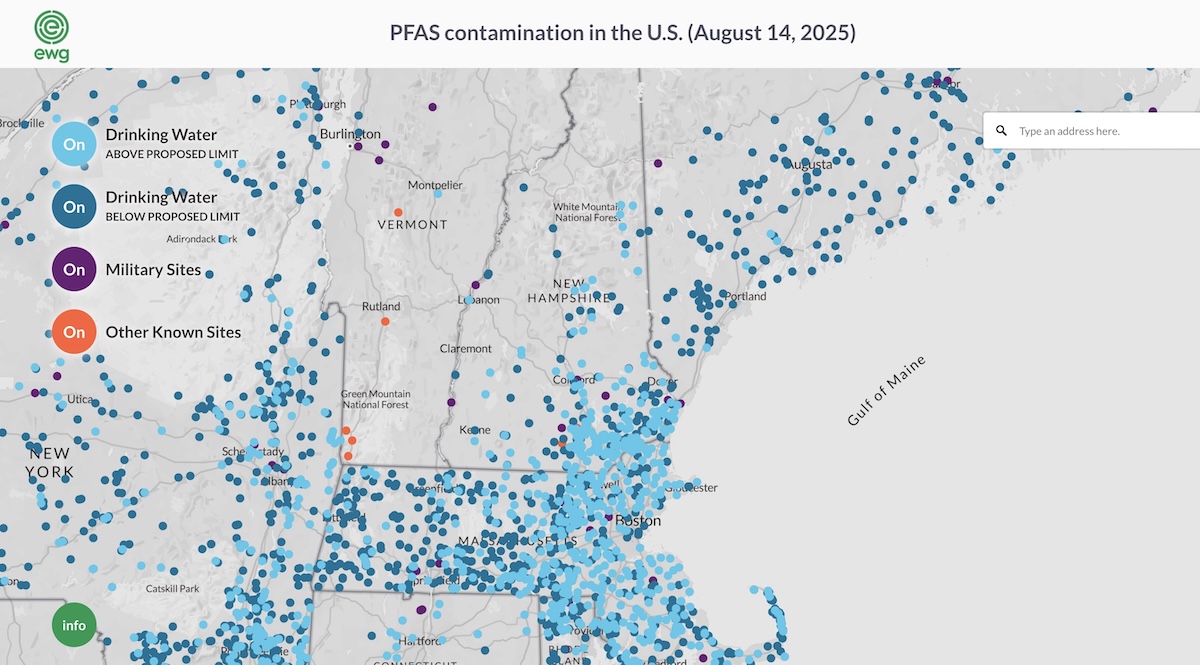
The most practical first step is understanding your local water profile. Tools like the EWG’s interactive map allow you to check PFAS detections by zip code and put your own situation into context. From there, choosing a reverse osmosis system that fits your household’s size, lifestyle, and space constraints becomes a straightforward decision. Reducing PFAS exposure doesn’t require drastic changes, just the right information and the right system under your sink.